Grass seeds in dogs, the hidden Australian summer hazard
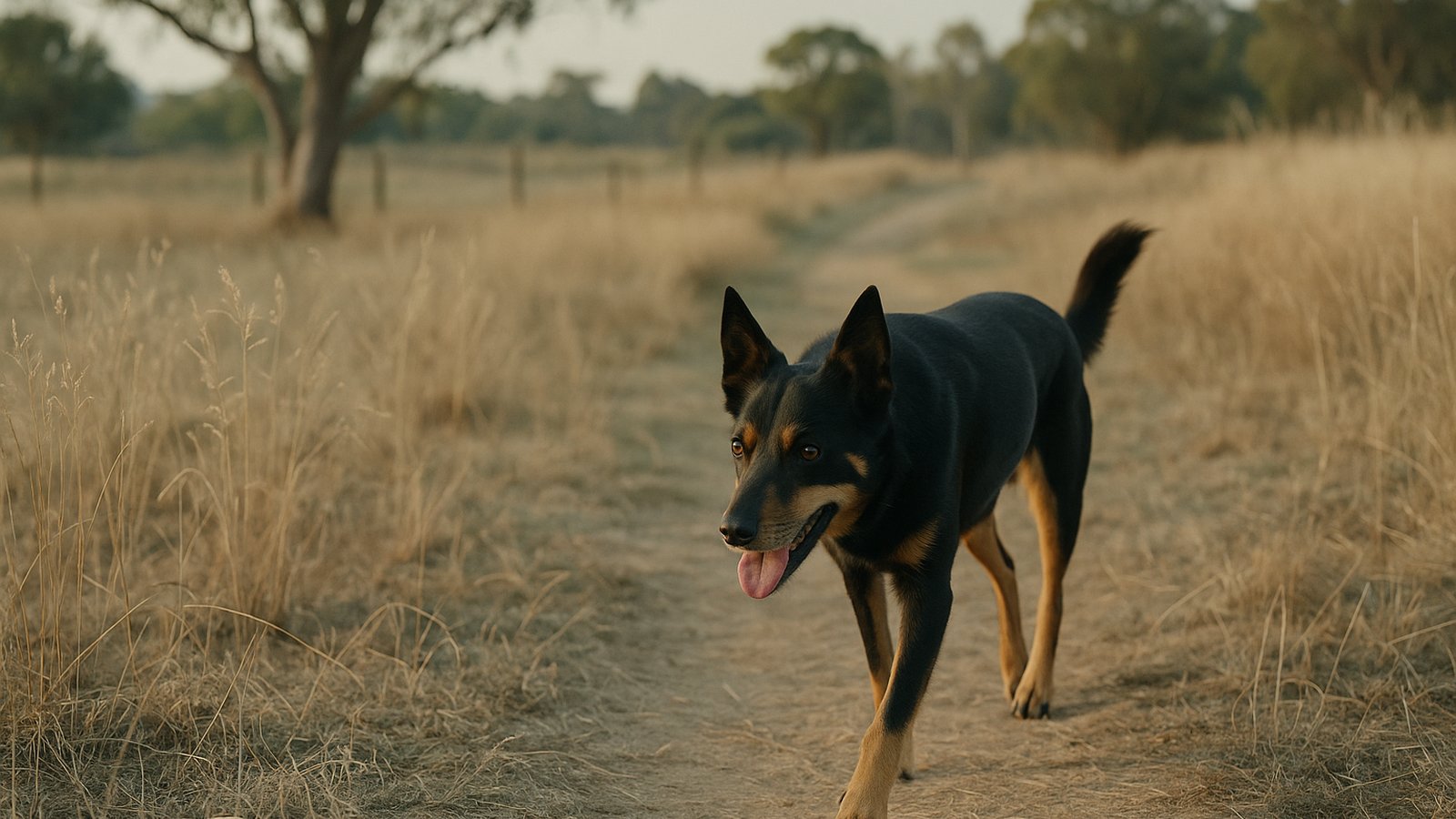
From late spring through summer, Australian vets see a steady parade of dogs in trouble from a problem most owners hadn't heard of: grass seeds. The dried seed heads of certain grasses act like one-way fish hooks, burrowing into paws, ears, eyes, noses and skin. They're a uniquely Australian problem, and they cause real damage if ignored. Below is what to watch for, why they're so dangerous, and how to prevent the worst of it (mostly: a 60-second post-walk check that costs nothing).
Why grass seeds are dangerous for dogs
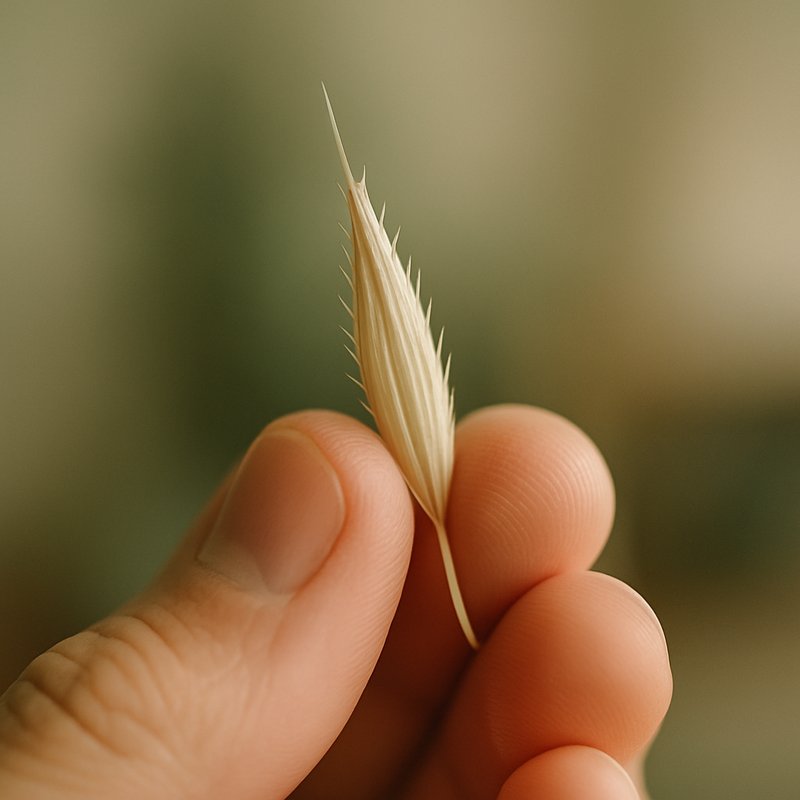
Grass seeds are designed by nature to plant themselves. The barbed shape grips fur, then the seed advances forward only, never backward, every time the animal moves. Backward-pointing barbs and the seed's slender, pointed tip work together like a one-way valve, driving deeper with every step. Evolution did its job. We didn't account for Labradors.
Once a seed reaches the skin, it punches through and migrates inside the body. Vets have removed grass seeds from dogs' lungs, abdomens, behind eyes, in the spinal canal, and under the diaphragm. Travelling seeds become medical emergencies, some have killed dogs.
Two main offenders in Australia are Barley Grass (Hordeum leporinum) and Spear Grass (Heteropogon contortus). Both are widespread, particularly in dry, brown, late-summer paddocks, vacant lots and bushland edges.
Where grass seeds get stuck
The most common entry points, in rough order of frequency:
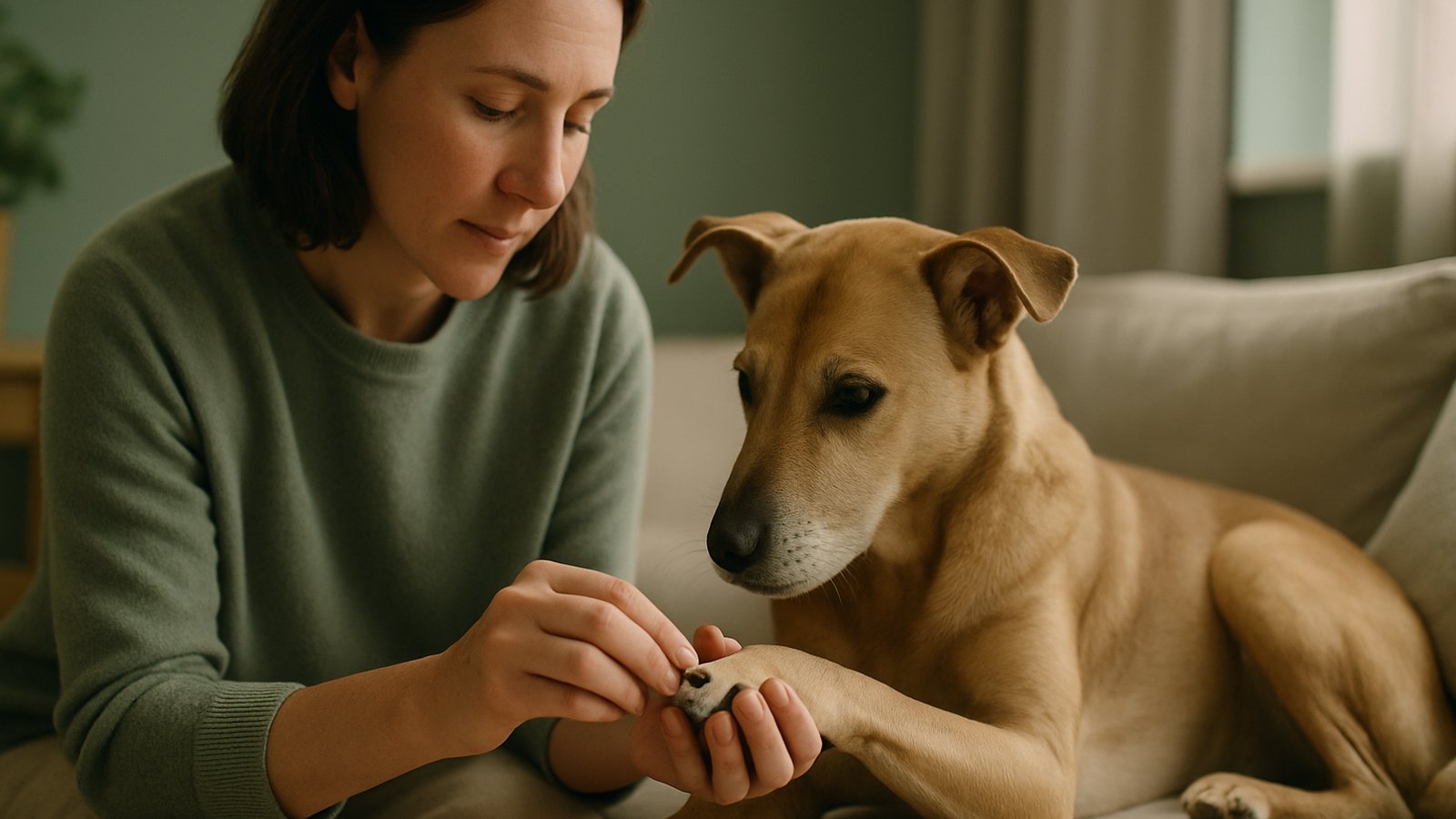
- Paws, between the toes, especially in long-haired breeds with hairy feet. Seeds work down into the webbing and through the skin.
- Ears, falls or pushes into the ear canal during sniffing, then the dog shakes its head and drives it deeper.
- Eyes, gets caught under the third eyelid or against the cornea. Severe pain.
- Nose, inhaled while sniffing through long grass. Triggers violent sneezing fits.
- Skin and fur, armpits, groin, between leg folds. Can migrate inward over days to weeks.
- Mouth and throat, chewed plants, leading to gum or tongue injuries.
- Vulva and prepuce, uncommon but happens, with seeds tracking into the urinary tract.
Symptoms by location
Paws
- Sudden limp on one paw
- Constant licking or chewing at one foot
- Swelling between the toes (often a small lump that develops a draining hole)
- Yellow or bloody discharge from a foot wound
Ears
- Sudden, frantic head shaking
- Tilting head to one side
- Pawing at the ear
- Crying or yelping when the ear is touched
Eyes
- Squinting one eye
- Excessive tear flow from one eye
- Rubbing the eye on the ground or with a paw
- Visible redness or swelling around the eye
Nose
- Sudden bouts of explosive sneezing, the kind that startles you from another room
- Bloody nasal discharge from one nostril
- Pawing at the nose
- Reverse sneezing or repeated snorting
Skin and fur
- A small puncture wound that doesn't heal
- A weeping or pus-discharging hole on the body, often in armpit or groin
- Persistent licking at one spot
- Sometimes a visible seed on the skin surface
Grass seed season in Australia
Peak season is late spring through summer, roughly October to March across most of the country, though it varies by region:
- Southern Australia (Vic, Tas, southern NSW): peak November to February
- Northern Australia (NT, QLD, northern WA): seeds present much of the year, often worse after wet seasons
- WA and SA: seeds set early, with peak hazard November to January
Dangerous part of the season starts when grass dries out and turns brown. Green spring grass doesn't shed barbed seeds. The dried summer stalks do. (If your local park has gone golden, treat it as a hostile environment.)
What to do if you suspect a grass seed
For paws and skin
If you can see a seed sitting on the surface and grip it with tweezers, you can carefully pull it straight out, slow, steady, no twisting. Don't snap it off, leaving the body of the seed in the skin. If it's already buried or bleeding, leave it for the vet.
For ears, eyes and nose
Don't try to remove these yourself. The ear canal is L-shaped and you can push the seed deeper. Eye seeds need a sterile environment. Nasal seeds usually require sedation to find. Phone your vet. If it's after hours and the dog is in real distress, see the emergency vet guide.
While you wait
- Keep your dog calm to reduce migration
- Stop them licking, scratching or rubbing the affected area
- Don't apply ointment, antiseptic or any home remedy that obscures the wound
- If there's a visible foreign body on the eye, don't let your dog rub it
- Note the time of any sudden onset symptoms, useful for the vet
Treatment and removal
Vet visit
Most grass seed cases need light sedation or general anaesthesia for thorough exploration and removal. Common procedures:
- Otoscope removal from the ear canal, typically under sedation
- Eye exploration with fluorescein staining and removal under anaesthesia
- Skin exploration, opening up the small puncture, finding the migrating tract, removing the seed and flushing
- Nasal endoscopy for nasal seeds in trickier cases
- X-ray or ultrasound if the seed has migrated and isn't easily found
Costs
A simple grass seed in a paw caught early might cost $250 to $600 to address. A migrating seed requiring exploratory surgery, imaging or referral can run into thousands. The earlier you catch it, the cheaper it stays. The vet payment plans guide covers options if cost is an issue.
If you can't get to a vet today
For mild paw cases caught early, soaking the affected paw in clean warm water with a small amount of antiseptic for 5 to 10 minutes can occasionally help a surface seed work back out. Most cases need a vet within 24 hours though, don't wait it out longer than that.
Emergency cases
A grass seed migrating internally, into the chest cavity or abdomen, can cause severe illness, breathing trouble or organ damage. Sudden severe lethargy, breathing difficulty or rapid weight loss in a dog with a recent paw or skin wound history is an emergency.
Prevention tips for walks
- Avoid long, dry grass during peak season, stick to mown paths and beaches
- Check your dog after every walk, especially between toes, in armpits, groin, ears and around the eyes
- Keep paw fur trimmed short. The dog grooming guide covers ongoing maintenance
- Double-coated dogs need extra checking, seeds hide in undercoat
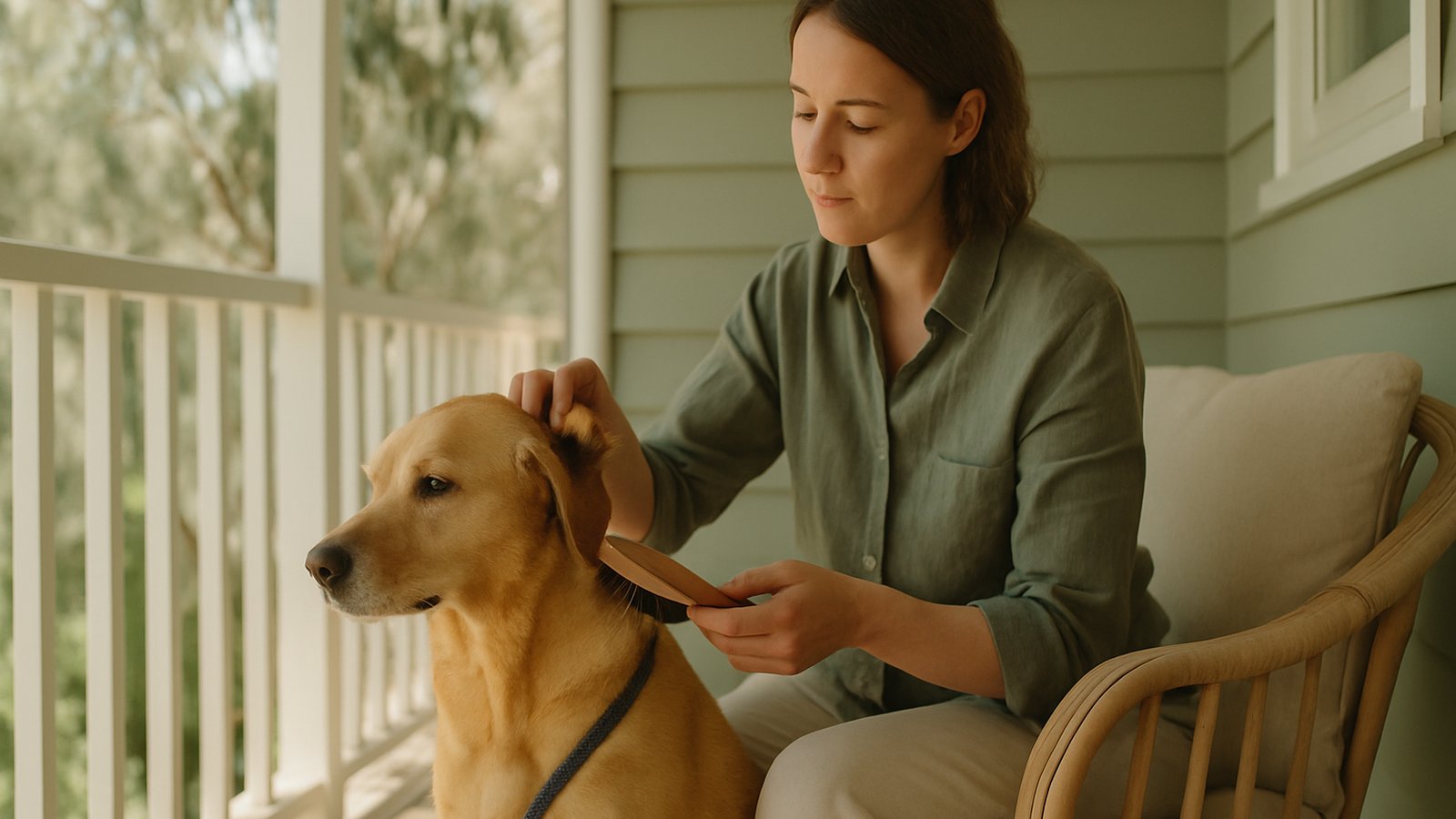
- Brush out daily during summer, catches seeds before they migrate
- Consider a snood or "grass seed suit" for dogs that work or run in heavy seed paddocks
- Mow your own lawn before it goes to seed
- Be especially vigilant after farm visits, country walks or bush hikes
The best prevention is the post-walk check. A 60-second nose-to-tail look, with parted fur and a fingertip search through the paws, prevents most cases. The dogs that end up at the vet are usually the ones whose owners didn't check. (We'd write that on a billboard if we could.)
Grass seeds are the closest Australian dog ownership comes to wildlife trying to plant itself in your pet. Once you know what to look for, the daily check becomes a 60-second habit. Information here is general; any suspected grass seed should be assessed by a registered veterinarian. Don't watch and wait, grass seeds get worse, never better.